VAR stands for Video Assistant Referee, a technology system introduced to help match officials make more accurate decisions during football matches. The VAR system allows a team of video officials to review key match incidents using multiple camera angles and replay technology, communicating with the on-field referee to correct clear and obvious errors. Since its formal introduction by FIFA in 2018 and subsequent adoption across major leagues worldwide, VAR has become one of the most debated and impactful changes in football’s history, fundamentally altering how goals are scored, penalties are awarded, and disciplinary decisions are made.
How Does VAR Work?
The VAR system operates from a centralized video operations room, where a team of qualified referees monitors the match through dozens of camera feeds. The VAR team typically consists of the main Video Assistant Referee and one or more assistants who help review different aspects of incidents simultaneously. They have access to every broadcast camera angle, plus additional dedicated VAR cameras positioned around the stadium to provide specific views for offside decisions and penalty area incidents.
VAR can only intervene in four specific categories of match-changing decisions: goals and the build-up to goals, penalty decisions, direct red card incidents, and mistaken identity (when the referee cautions or sends off the wrong player). The VAR cannot review yellow card decisions, corner kicks, throw-ins, or other minor incidents. This limitation is deliberate — the system was designed to correct only clear and obvious errors that have a significant impact on the match outcome, not to micro-manage every refereeing decision.
When a reviewable incident occurs, the VAR team immediately begins checking the footage. If they identify a clear and obvious error, they communicate this to the on-field referee through an earpiece. The referee then has three options: accept the VAR’s recommendation and change the decision, go to the pitchside monitor to review the footage personally (known as an On-Field Review or OFR), or maintain the original decision. For subjective decisions like fouls and handball, referees are encouraged to use the pitchside monitor rather than relying solely on the VAR’s recommendation. For factual decisions like offside, the VAR can directly inform the referee without an OFR.
The offside review process has become particularly sophisticated with the introduction of semi-automated offside technology (SAOT). This system uses dedicated cameras and artificial intelligence to track player positions and the ball, generating precise offside line graphics within seconds. SAOT was first used at the 2022 FIFA World Cup and has since been adopted by the Champions League and several domestic leagues. It has significantly reduced the time taken for offside reviews and eliminated the controversy around where exactly the lines are drawn on the pitch.
How VAR Has Changed Football
The statistical impact of VAR on football has been significant and measurable. In the Premier League, the number of incorrect key match decisions dropped from an average of approximately 7 percent before VAR to around 2-3 percent after its introduction. However, this improvement in accuracy has come at a cost: match stoppages for VAR reviews average around 90 seconds per check, and major reviews can take three to four minutes. The total added time in matches has increased across all leagues that use VAR, with some matches seeing seven or eight minutes of stoppage time in each half.
Penalty awards increased notably in the first season of VAR adoption across most leagues, as incidents of shirt-pulling, body-checking, and subtle fouls that previously went undetected were now identified on replay. Over subsequent seasons, this number has gradually decreased as players have adapted their behaviour, particularly at set pieces where defensive holding was previously widespread. The net effect has been a meaningful increase in penalty goals, which has implications for correct score predictions and goals markets.
The offside rule has been applied with unprecedented precision under VAR, leading to the now-familiar sight of goals being disallowed for margins of centimetres — an armpit, a toe, or a shoulder leaning beyond the defensive line. This level of precision has been controversial, with critics arguing that such marginal decisions go against the spirit of the offside law, which was originally designed to prevent goalhanging rather than to penalize fractional positional differences. In response, some competitions have experimented with a threshold or tolerance zone, where attackers are given a margin of error before being flagged offside.
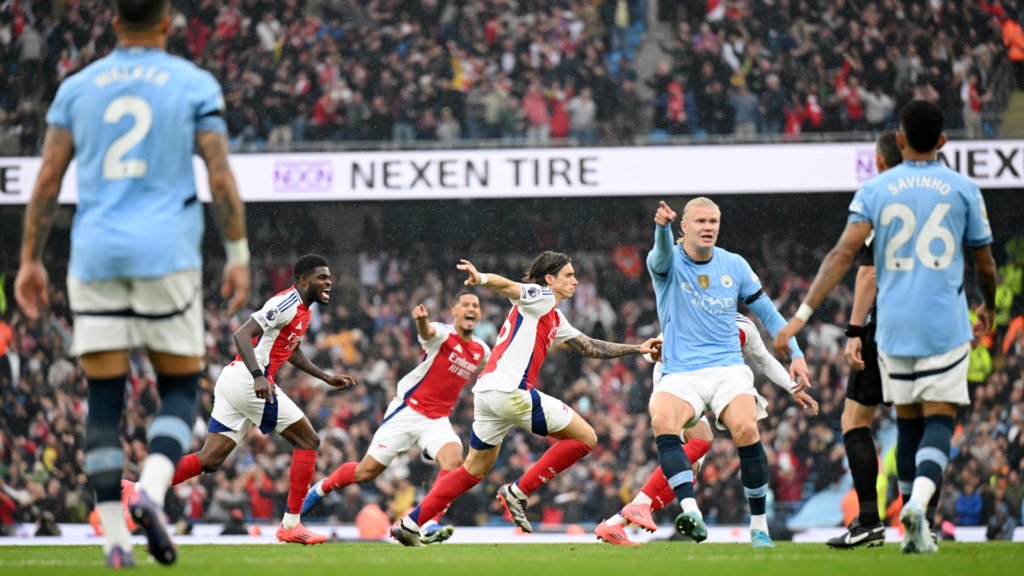
The psychological and tactical effects of VAR extend beyond individual decisions. Players now celebrate goals with less immediate conviction, knowing that a VAR review could overturn the decision. Managers have adjusted their tactical approaches, knowing that certain types of defending — particularly aggressive physical marking at corners — carry greater risk under VAR scrutiny. The dynamic between referees and players has also shifted, with less aggressive protesting of decisions since players know that genuinely incorrect calls can be overturned on review.
VAR Controversies and Criticisms
Despite improving overall accuracy, VAR has generated significant controversy. The time taken for reviews has been a persistent complaint, with fans in the stadium often left confused about what is being checked and why. Unlike television viewers who can watch the replay analysis in real time, stadium attendees may wait several minutes without information before learning whether a goal has been given or disallowed. This has led to calls for better in-stadium communication, including giant screen replays and announcements explaining the review process.
Inconsistency in VAR application across different matches and leagues has also been criticized. The subjective nature of decisions like handball, where interpretations of what constitutes a natural arm position vary between officials, means that similar incidents can produce different outcomes depending on which VAR team is operating. This inconsistency undermines the system’s primary purpose of eliminating clear and obvious errors, as fans and pundits argue about whether certain interventions themselves constitute errors.
The concept of clear and obvious error has proven difficult to define in practice. Some VAR teams intervene frequently, overturning decisions that many observers consider borderline rather than clearly wrong. Others take a more conservative approach, only recommending overturns for egregious mistakes. This philosophical difference between VAR teams creates a perception of inconsistency that has eroded trust in the system among some fans, players, and managers. Several high-profile incidents — where VAR either failed to intervene or intervened controversially — have kept the debate about the technology’s value alive.
VAR and Correct Score Predictions
For correct score prediction, VAR has introduced both challenges and opportunities. The increased number of penalties means that goal-scoring patterns have shifted slightly, with a higher proportion of goals coming from the spot rather than open play. This affects the probability distribution of scorelines, as penalty goals tend to be distributed more evenly across matches rather than clustering in high-scoring games. A match that might have ended 0-0 in the pre-VAR era could now finish 1-0 thanks to a penalty awarded for a foul that would previously have gone undetected.
Disallowed goals represent the flip side of VAR’s impact on scorelines. In any given Premier League matchweek, two or three goals are typically ruled out by VAR, primarily for offside. These disallowed goals mean that the actual scoreline differs from what it would have been under the old system, making historical data from the pre-VAR era slightly less reliable for prediction models. At Correct Score Predict, our algorithms account for the VAR effect by incorporating post-VAR statistical trends and adjusting expected goal probabilities accordingly.
The time added for VAR reviews has also subtly affected late-game dynamics. With more stoppage time being added, there are more minutes of play in which late goals can be scored. The frequency of goals scored after the 85th minute has increased in the VAR era, partly due to the additional time and partly due to the increased physical demands of longer matches. This trend is particularly relevant for correct score prediction, as late goals are the events most likely to change a predicted scoreline.
Understanding VAR’s impact helps bettors make more informed decisions. Knowing that VAR tends to increase penalty awards, extend matches through added time, and occasionally disallow goals for tight offside calls allows you to adjust your expectations and find value in markets that may not yet fully account for these trends. Our prediction models at Correct Score Predict incorporate all of these factors to provide the most accurate scoreline forecasts possible.