A hat trick in football refers to a single player scoring three goals in one match. It is one of the most celebrated individual achievements in the sport, representing a combination of skill, positioning, composure, and sometimes luck that produces an outstanding personal performance. The term has become deeply embedded in football culture, with hat trick heroes earning special recognition from fans, media, and the tradition of taking home the match ball as a memento. Understanding what constitutes a hat trick, how often they occur, and what they mean for match outcomes is valuable knowledge for football fans and bettors alike.
The Origins and Variations of the Hat Trick
The term hat trick has its origins in cricket rather than football. In the 1850s, a cricket bowler who took three wickets with three consecutive deliveries was rewarded with a new hat by their club, a tradition that gave rise to the phrase. The term was later adopted by football and other sports to describe any three-fold achievement by a single player in a single contest. By the early twentieth century, the hat trick had become a standard part of football’s vocabulary, used universally across all countries and languages where the sport is played.
A standard hat trick simply requires a player to score three goals in a single match, regardless of when the goals are scored or what happens between them. A perfect hat trick is a more specific and rare achievement where a player scores one goal with their right foot, one with their left foot, and one with their head, all in the same match. This variation is particularly prized because it demonstrates the player’s versatility and all-round ability in front of goal. Even rarer is the flawless or pure hat trick, where a player scores three consecutive goals without any other player scoring in between.
While three goals constitute a standard hat trick, players who score four or more goals in a single match achieve additional distinctions. Four goals is sometimes called a haul or poker, while five goals in a match is known as a glut or manita (Spanish for little hand, reflecting the five fingers). These extraordinary performances are rare even at the highest level, though they do occur — Robert Lewandowski famously scored five goals in nine minutes as a substitute for Bayern Munich against Wolfsburg in 2015, one of the most remarkable individual performances in Bundesliga history.
The question of whether goals scored in extra time count towards a hat trick is generally straightforward: yes, they do. A hat trick encompasses all goals scored by a player during the entire duration of a match, including extra time. However, goals scored in penalty shootouts do not count, as a shootout is technically a separate procedure to determine the winner rather than part of the match itself. In some record-keeping systems, goals scored in extra time may be noted separately, but they are universally counted towards individual match tallies and hat tricks.
Hat Trick Statistics and Records
Hat tricks are relatively rare events in professional football. In the English Premier League, approximately 15 to 20 hat tricks are scored per season across all matches, out of a total of 380 games. This means that a hat trick occurs in roughly 4 to 5 percent of matches, making it an uncommon but not exceptionally rare occurrence. The frequency is slightly higher in leagues and competitions where there are larger quality gaps between teams, as dominant teams and elite strikers are more likely to score three or more against weaker opposition.
The all-time Premier League hat trick record is held by Sergio Aguero with 12 hat tricks, followed by Alan Shearer with 11. In Champions League history, Cristiano Ronaldo holds the record with eight hat tricks, while Lionel Messi has recorded eight as well across all European competition appearances. These records reflect the extraordinary goal-scoring consistency of the greatest strikers in football history, who not only scored prolifically but regularly reached the three-goal threshold that distinguishes a hat trick from a standard good performance.
The fastest hat trick in Premier League history was scored by Sadio Mane in just two minutes and 56 seconds while playing for Southampton against Aston Villa in May 2015. At the international level, the fastest hat trick is widely credited to Masashi Nakayama of Japan, who scored three goals in three minutes and 15 seconds against Brunei in 2000. These speed records highlight how quickly a match situation can change when a player enters a particularly dominant or inspired spell of goalscoring.
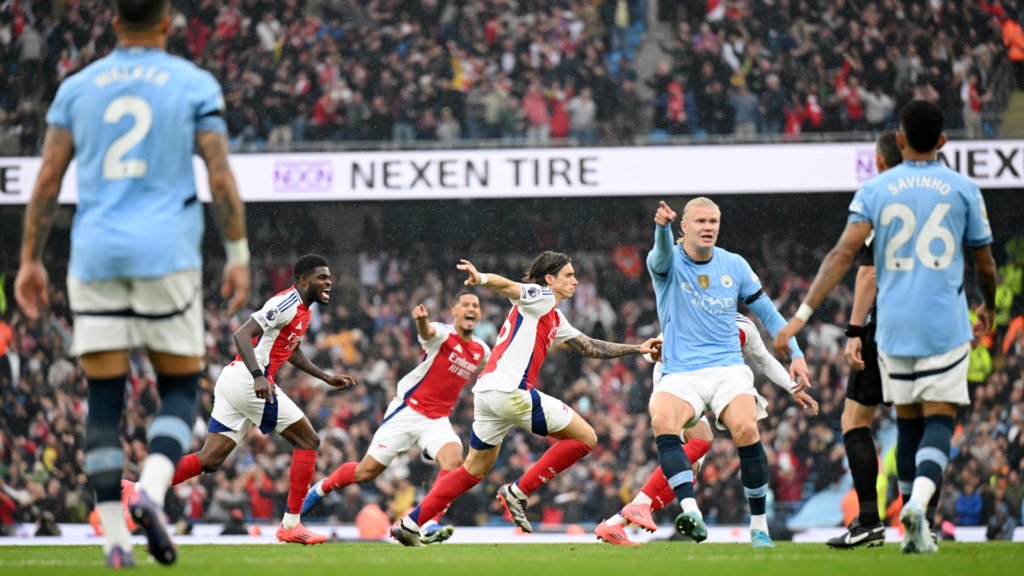
Some players have an extraordinary propensity for hat tricks that goes beyond their overall goal-scoring rate. Erling Haaland, for example, scored multiple hat tricks in his first Premier League season, demonstrating an ability to pile up goals when opportunities presented themselves rather than spreading his goal output evenly across matches. This clustering tendency is relevant for correct score prediction, as it suggests that certain players’ goals are not independently distributed across matches but are instead correlated within individual games.
The Tactical Context of Hat Tricks
Hat tricks do not occur randomly — they are the product of specific match conditions that allow a single player to dominate the scoring. The most common context for a hat trick is a match where one team is significantly stronger than the other, creating numerous goalscoring opportunities for the dominant team’s striker. When a strong team faces a weak defensive opponent, the striker may have five, six, or more clear chances in the match, and converting three of these is well within the capability of an elite finisher.
Penalty kicks contribute significantly to hat trick frequency. Many hat tricks include at least one penalty, as the designated penalty taker gets an additional high-quality chance to score beyond what open play provides. In some cases, a player may score two goals from open play and then complete their hat trick from the penalty spot, or vice versa. The availability of penalties means that designated penalty takers have a structural advantage in the hat trick statistics, which is reflected in the record books — many of the most prolific hat trick scorers were also their team’s primary penalty taker.
The manager’s decision about when to substitute a player on the verge of a hat trick adds an intriguing human element. When a player has scored twice, there is often visible tension about whether the manager will withdraw them for tactical reasons (such as rest before an upcoming important match) or leave them on the pitch to pursue their third goal. Most managers respect the significance of the hat trick and allow players to remain on the pitch when they are close, but this is not always the case, and substitutions at 2-0 or 3-0 sometimes deny players the opportunity to complete their treble.
Hat Tricks in Correct Score Predictions
For correct score prediction, hat tricks have direct implications because a single player scoring three goals strongly suggests a high-scoring match. The most common scorelines in matches where a hat trick is scored are 3-0, 4-0, 3-1, 4-1, and 5-0, reflecting the dominance of the hat trick scorer’s team. Scorelines where the hat trick scorer’s team concedes multiple goals (such as 3-3 or 4-3) are less common but do occur, particularly when the hat trick comes from a striker whose team has defensive vulnerabilities.
Predicting when a hat trick will occur is extremely difficult, as the event requires a specific combination of match circumstances and individual brilliance. However, certain conditions increase the probability: home matches against weak defensive teams, matches where a star striker is in a hot streak of form, and games where the opponent is depleted by injuries or suspensions to key defenders. For pre-match correct score predictions, the main takeaway is that matches with a high expected goal count for one team have an elevated probability of producing a hat trick, which shifts the distribution towards more extreme scorelines.
In live prediction, a player who has scored twice becomes the focus of hat trick markets, with tipsters offering odds on whether they will complete the treble. The probability of a player who has scored twice going on to score a third varies based on time remaining, the match situation, and the player’s historical rates. Approximately 15 to 20 percent of players who score twice in a Premier League match go on to complete the hat trick, though this rate is higher for elite strikers and in matches where their team continues to dominate.
At Correct Score Predict, our models account for the scoring patterns and clustering tendencies of individual players when generating scoreline forecasts. Understanding that some players are more likely to produce multi-goal performances than others helps us create more accurate probability distributions for specific scorelines, particularly in matches where elite strikers face vulnerable defences.