A formation in football describes the way a team’s outfield players are arranged on the pitch, typically expressed as a series of numbers that represent the players in each positional line from defence to attack. For example, a 4-3-3 formation indicates four defenders, three midfielders, and three forwards, while a 4-4-2 represents four defenders, four midfielders, and two strikers. The goalkeeper is not included in the formation number as they always occupy the same position. Understanding formations is essential for analysing how teams play, predicting match outcomes, and appreciating the tactical battles that unfold during every football match.
Common Football Formations and Their Characteristics
The 4-3-3 has become the dominant formation in modern football, used by many of the world’s top clubs and national teams. It provides a balanced structure with width in attack through two wingers, a central striker to lead the line, and a midfield three that can be configured in various ways — a single pivot with two attacking midfielders (4-1-2-3), a double pivot with one attacking midfielder (4-2-1-3), or three central midfielders at similar depths. The 4-3-3’s versatility allows teams to adapt their approach within the same basic shape, pressing high with attacking intent or sitting deeper to defend in a compact 4-5-1 when out of possession.
The 4-4-2, once the default formation in English football, has declined in prevalence at the highest level but remains effective in certain contexts. Its main strength is defensive simplicity — two banks of four create a compact, organized shape that is difficult to break down. The partnership between two strikers can create problems for opposing centre-backs, particularly when one striker drops deep to link play while the other runs in behind the defence. However, the 4-4-2 can be outnumbered in midfield against teams playing with three central midfielders, which is a key reason for its decline among top clubs.
Three-at-the-back formations such as 3-5-2 and 3-4-3 have experienced a resurgence in recent years. These systems use three centre-backs to provide defensive security while deploying wing-backs who push forward to provide width in attack. The 3-5-2 was popularized in modern football by Antonio Conte during his time at Juventus and Chelsea, where it provided both defensive solidity and dynamic attacking play through the wing-backs. The main vulnerability of three-at-the-back systems is the space left behind the wing-backs when they push forward, which quick opponents can exploit on the counter-attack.
More specialized formations include the 4-2-3-1, which provides a dedicated number ten behind the striker with two holding midfielders for protection; the 5-3-2 or 5-4-1, which prioritize defensive stability and are often used by underdogs in major cup matches; and the highly fluid 4-1-4-1 or 4-1-3-2 systems used by possession-based teams where player positions are more guidelines than fixed locations. The trend in modern tactical coaching is towards positional play rather than rigid formations, where players occupy specific zones and interchange positions fluidly within the team’s overall structure.
How Formations Affect Match Outcomes
The interaction between two teams’ formations creates the tactical landscape of a match, with certain formation matchups producing predictable patterns of play. When a 4-3-3 faces a 4-4-2, the team in the 4-3-3 typically enjoys a midfield numerical advantage that allows them to control possession, while the 4-4-2 team may find more direct routes to goal through their two-striker partnership against three centre-backs in transition. These matchup dynamics influence the number of chances each team creates, the areas of the pitch where the action concentrates, and ultimately the likely scoreline range.
Defensive formations and low blocks tend to produce lower-scoring matches. When a team sets up in a 5-4-1 or 5-3-2 and defends deep, the opposing team often struggles to create clear-cut chances despite enjoying heavy territorial dominance and possession. Research has shown that matches where one team sits deep and defends produce an average of approximately 2.1 goals, compared to roughly 2.8 goals when both teams play attacking formations. This statistical difference is significant for correct score predictions and total goals markets.
Formation changes during a match — whether through substitutions, tactical adjustments, or in response to a red card — can dramatically alter the game’s dynamics and eventual scoreline. A team that switches from a 4-3-3 to a 4-4-2 when chasing a goal introduces more directness and aerial threat, while a team protecting a lead may switch to a 5-4-1 to add defensive layers. These in-game adjustments are observable through player positioning and can be used by in-play bettors to anticipate changes in the match’s tempo and scoring probability.
Modern Tactical Evolution and Fluid Systems
Contemporary football has moved beyond static formations towards dynamic systems where the formation changes depending on whether the team has the ball or not. A team that defends in a 4-4-2 may attack in a 3-2-5 as full-backs push forward into midfield and wingers tuck inside. This in-possession versus out-of-possession shape distinction is crucial for understanding how modern teams actually play, as the nominal formation listed in the teamsheet often bears little resemblance to the shapes the team adopts during different phases of the match.
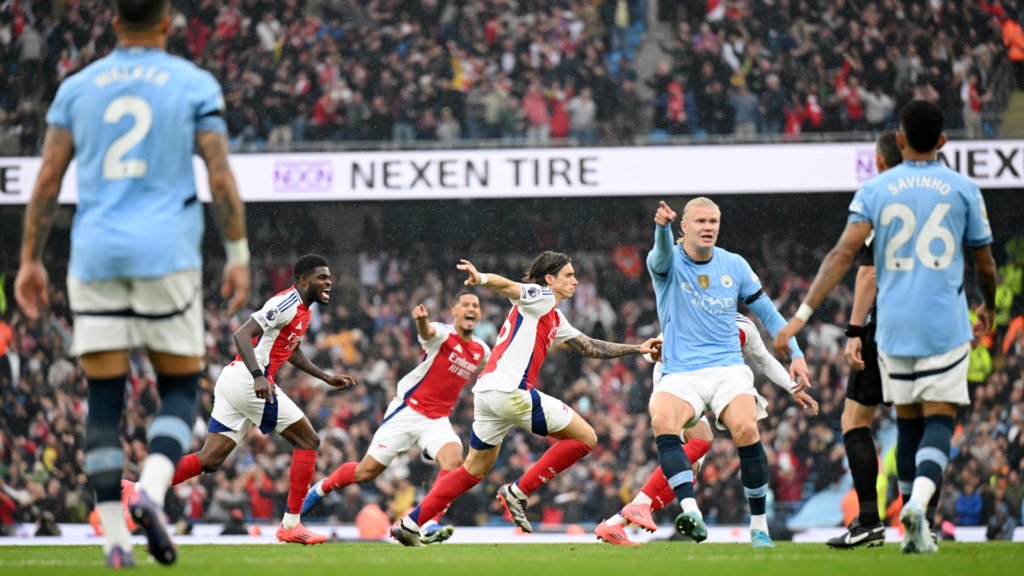
Pep Guardiola’s Manchester City teams have been at the forefront of this tactical fluidity. Their nominal 4-3-3 transforms into a variety of shapes during matches — the right-back may invert into midfield, the left-back may push forward as a winger, and the striker may drop into the number ten position, creating a shape that shifts moment by moment based on where the ball is and how the opposition is organized. This level of tactical complexity makes it more difficult to categorize teams by formation alone, but it also creates new opportunities for analysis and prediction.
The evolution of the false nine role exemplifies how traditional positional concepts are being reimagined. Rather than playing a traditional centre-forward who stays high and central, teams like Barcelona under Guardiola and Messi used a false nine who dropped deep to receive the ball, creating space for wingers and midfielders to run into. This tactical innovation changed how defences had to organize and contributed to a shift in goalscoring patterns, with more goals coming from wide forwards and attacking midfielders rather than traditional strikers.
Understanding these tactical trends is important for anyone involved in match prediction because they affect which players score, how goals are created, and the overall tempo and style of matches. A team that plays with a false nine and inverted wingers creates different types of chances than a team with a traditional striker and orthodox wingers, which in turn affects the probability distribution of scorelines and the types of goals that are most likely to be scored.
Formations and Correct Score Predictions
Formation analysis should be a component of any serious correct score prediction approach. The interaction between two teams’ formations and playing styles produces specific patterns that can be quantified and used to refine scoreline predictions. A possession-dominant team in a 4-3-3 facing a deep-defending 5-4-1 produces different expected scoreline distributions than two attacking 4-3-3 teams going head to head in an open, end-to-end contest.
Pre-match formation analysis begins with understanding each team’s preferred system and how it has performed against similar opposition. If a team consistently concedes when facing a 3-5-2 that exploits the channels between their full-backs and centre-backs, this vulnerability should be factored into the prediction. Similarly, a team whose attack is optimized for breaking down low blocks through patient build-up play may be less effective against a high-pressing opponent that disrupts their possession patterns.
The expected formation matchup also influences the pace and physical demands of the match, which in turn affects when goals are likely to be scored. High-pressing tactical approaches tend to create chances early in matches but can lead to fatigue in the second half, potentially producing a different scoring pattern than a match between two teams that prefer to control the tempo. These timing patterns are relevant for both correct score predictions and in-play prediction, where the expected distribution of goals across the match affects the optimal moments to place tips.
At Correct Score Predict, our analysis considers tactical systems and formation matchups when generating predictions. By understanding how teams set up and how different tactical approaches interact, we provide more nuanced scoreline forecasts that reflect the actual dynamics of each specific match rather than relying solely on aggregate statistics.