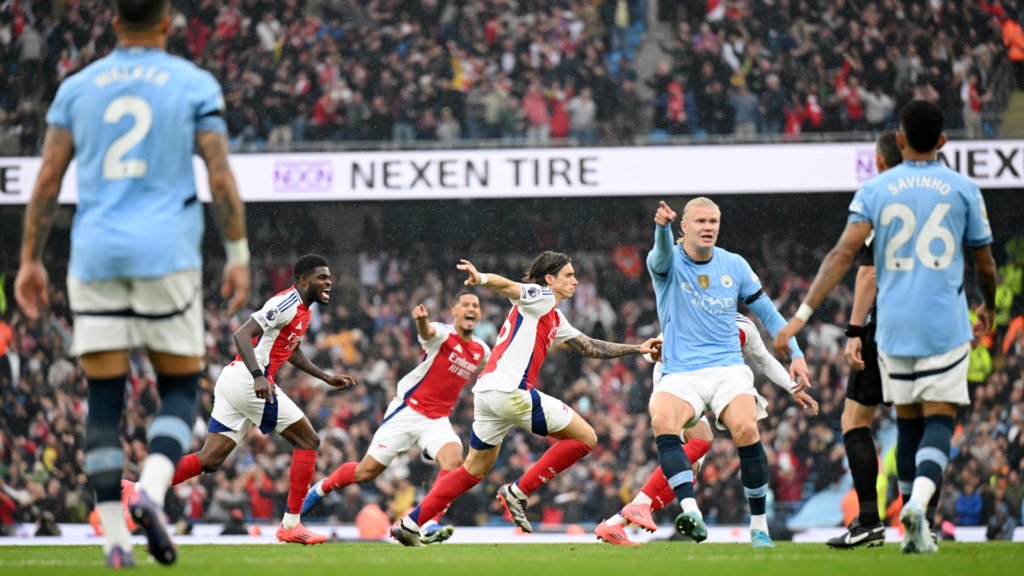
Possession in football refers to the percentage of time during a match that each team has control of the ball. It is one of the most commonly cited statistics in football analysis and broadcasting, typically displayed as a simple percentage split such as 60-40 or 55-45. Possession is calculated by counting the number of successful passes completed by each team and expressing them as a percentage of the total passes in the match, though some data providers use time-based methods that measure the actual duration each team has the ball at their feet. Understanding what possession means, what it indicates about team performance, and its limitations as a predictive tool is essential for informed football analysis.
How Possession Is Measured
The two primary methods of measuring possession produce slightly different results. The pass-based method, used by Opta and most broadcast providers, calculates possession as the ratio of each team’s completed passes to the total completed passes in the match. A team that completes 400 passes in a match where the total is 700 has approximately 57 percent possession by this measure. The time-based method measures the actual seconds that each team has the ball under control, providing a different perspective that accounts for the tempo of passing and the duration of individual possessions.
Neither method is perfect. The pass-based method can overstate the possession of teams that play many short, quick passes in non-threatening areas while understating the possession of teams that take longer on the ball in dangerous positions. The time-based method better captures actual ball control but can be influenced by goalkeepers holding the ball and other dead-time situations that inflate the total without reflecting meaningful attacking possession. In practice, the two methods produce broadly similar results for most matches, and the choice of measurement rarely changes the overall narrative about which team dominated the ball.
The average possession split in most major European leagues is approximately 50-50 by definition, since the two teams’ percentages must sum to 100. However, individual team averages vary enormously. Manchester City under Pep Guardiola have consistently averaged 63 to 68 percent possession in Premier League matches, the highest in the division by a significant margin. At the other extreme, some defensive, counter-attacking teams deliberately concede possession, averaging only 35 to 40 percent while relying on efficiency in transition to create chances and win matches.
Possession statistics vary based on match context. Teams that take an early lead often see their possession percentage increase as the trailing team becomes more aggressive and open in pursuit of an equalizer, which paradoxically means the trailing team often gives up even more possession despite needing it more. Home teams typically have slightly higher possession than away teams due to the psychological confidence of playing in their own stadium. In international tournaments, possession disparities can be extreme when top-ranked teams face significant underdogs.
Does More Possession Mean Better Results?
The relationship between possession and match results is positive but weaker than many fans assume. Teams with higher possession win more often than they lose, but the correlation is not as strong as the correlation between expected goals, shots on target, or other more direct measures of chance creation. Research across multiple seasons and leagues shows that possession explains only about 20 to 30 percent of the variance in match results, meaning that 70 to 80 percent of what determines a result is independent of who had more of the ball.
Several factors explain why possession is an imperfect predictor of results. First, possession quality matters more than possession quantity. A team can have 70 percent possession but spend most of it passing sideways in their own half without threatening the opposition goal. Another team might have only 30 percent possession but use their time on the ball efficiently, creating dangerous chances through quick transitions. The most meaningful possession statistics are those that measure possession in specific zones of the pitch — particularly the final third — rather than overall possession, which includes non-threatening ball circulation in deep areas.
Counter-attacking teams have demonstrated consistently that it is possible to win matches and even championships with low possession. Atletico Madrid under Diego Simeone won La Liga in 2013-14 with average possession below 50 percent. Leicester City’s Premier League-winning season in 2015-16 saw them average only 42 percent possession across the campaign. These examples demonstrate that effective use of the ball when you have it — rather than the sheer volume of time spent with it — is what ultimately determines match outcomes.
Possession in Match Prediction
While possession alone is a limited predictor of match outcomes, it provides useful contextual information when combined with other statistics. A team’s expected possession in a given match helps predict the style of the encounter — a match where one team is expected to have 65 percent possession will likely be a patient, territorial affair rather than an end-to-end contest. This stylistic prediction has implications for total goals markets (possession-dominant matches tend to be slightly lower-scoring), BTTS markets (the low-possession team may struggle to create enough chances to score), and correct score predictions (possession-heavy teams tend to produce more 1-0 and 2-0 results than 3-3 or 4-2 scorelines).
The interaction between two teams’ possession preferences is particularly informative. When a high-possession team faces a low-possession team, the match dynamic is predictable — one team will control the ball while the other defends and counters. When two high-possession teams meet, the result is often a contested midfield battle with fewer clear-cut chances. When two low-possession teams face each other, the match may lack a clear pattern and become disjointed. These dynamic predictions help forecast not just the likely result but the type of match that will unfold.
At Correct Score Predict, possession data is one of several inputs in our prediction models, used alongside expected goals, defensive metrics, and contextual factors to generate comprehensive scoreline forecasts. We recognize possession’s value as a stylistic indicator while also acknowledging its limitations as a standalone predictor. Understanding where possession fits in the broader analytical picture helps our users interpret match dynamics and make better-informed prediction decisions.
Possession and Correct Score Prediction
For correct score prediction specifically, possession preferences help narrow the range of likely scorelines. High-possession teams tend to produce a narrower range of scorelines centered around 1-0, 2-0, and 2-1 rather than extreme results. This is because possession-dominant football tends to be controlled and methodical, reducing the randomness that produces very high or very low-scoring matches. Counter-attacking teams, conversely, tend to produce more variable scorelines because their approach involves accepting risk in exchange for explosive attacking opportunities. Understanding these patterns helps bettors focus their correct score selections on the scorelines most consistent with each team’s playing style.