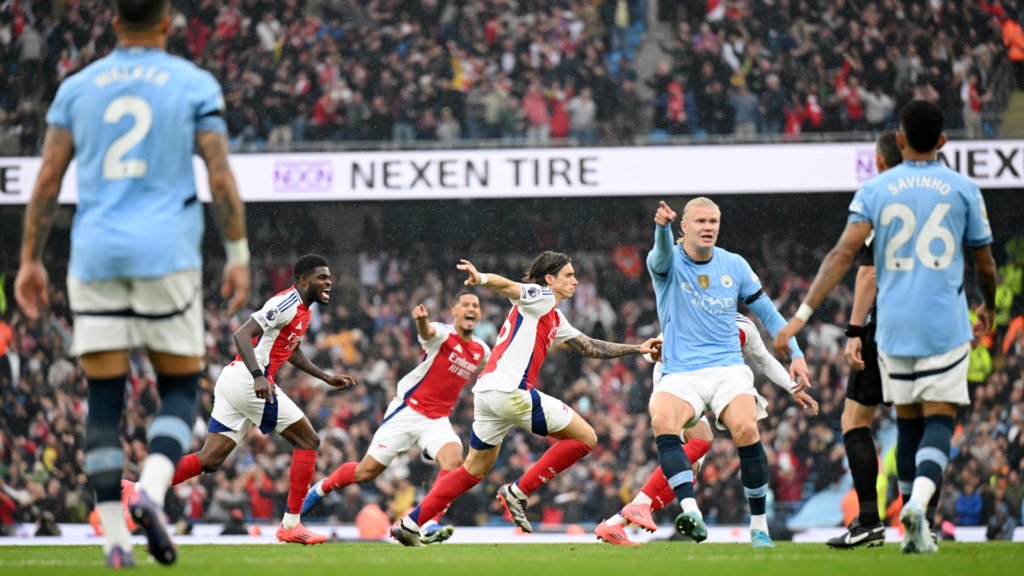
Shots on target is a football statistic that counts the number of shots that would have entered the goal if not stopped by the goalkeeper or a last-ditch block on the goal line. A shot is classified as on target if it requires a save to prevent a goal, hits the woodwork and goes in, or crosses the goal line for a goal. Shots that miss the goal entirely — going over the crossbar or wide of the posts — and shots that are blocked before reaching the goal are not counted as shots on target. This statistic is one of the most widely used measures of attacking effectiveness and is closely correlated with goalscoring, making it valuable for match prediction and correct score analysis.
Why Shots on Target Matters
Shots on target is a stronger predictor of match outcomes than total shots because it filters out speculative efforts and measures only the attempts that genuinely threatened the goal. A team that takes twenty shots with only three on target is creating volume without quality, while a team that takes eight shots with six on target is converting a high proportion of their efforts into actual saves for the goalkeeper. Research consistently shows that shots on target correlates more strongly with goals scored and match results than total shots, making it a more reliable metric for analytical purposes.
The average number of shots on target per team per match in the Premier League is approximately four to five, with the total for both teams combined averaging around nine to ten. Top attacking teams may average six to seven shots on target per match, while weaker attacking sides may average only three to four. This range means that the team with more shots on target wins the match approximately 55 to 60 percent of the time, a meaningful but not overwhelming advantage that reflects the inherent unpredictability of football.
The conversion rate from shots on target to goals — the ratio of goals scored to shots on target — is a key efficiency metric. Across the Premier League, the average conversion rate from shots on target is approximately 30 to 35 percent, meaning roughly one in three shots on target results in a goal. This rate varies significantly between individual players, with elite finishers converting at rates of 40 to 50 percent from shots on target, while less clinical players may convert at only 20 to 25 percent. Goalkeeping quality also affects this rate, as better goalkeepers save a higher proportion of shots on target.
The relationship between shots on target and expected goals (xG) provides additional insight. A team might have five shots on target, but the quality of those shots matters enormously — five shots on target from the edge of the box with an average xG of 0.08 each is very different from five shots on target from inside the six-yard box with an average xG of 0.40 each. The best analytical approach combines shot volume (shots on target count) with shot quality (xG per shot) to get the most complete picture of a team’s attacking threat.
Shots on Target in Match Analysis
During live match analysis, the shots on target count provides a real-time indicator of which team is creating more dangerous opportunities. A team that has registered four shots on target in the first half while their opponent has none is likely dominating the match even if the score is still 0-0. This information is valuable for in-play prediction, as it suggests the dominant team is likely to score eventually if they maintain their level of chance creation, and the live odds may not fully reflect this dominance if the scoreline is still level.
The timing distribution of shots on target within a match reveals patterns about team approaches. Some teams generate most of their shots on target in the first half, reflecting a high-energy pressing approach that may fade as fatigue sets in. Others are second-half specialists who build into the game and create their best chances later in the match. Understanding these patterns helps predict when goals are most likely to be scored, which is relevant for both correct score and specific time-of-goal prediction markets.
Defensive analysis through shots on target conceded is equally important. A team that concedes a high number of shots on target per match has a fundamental defensive problem that is likely to result in goals, regardless of their goalkeeper’s quality. Even the best goalkeeper cannot save every shot on target, and a team that allows six or seven shots on target per match will concede regularly. Identifying teams that allow many shots on target helps predict matches where goals against are likely, informing both correct score predictions and BTTS analysis.
Shots on Target and Correct Score Predictions
Shots on target data feeds directly into correct score prediction models through its relationship with expected goals and actual goal totals. Teams that consistently generate more shots on target than average are more likely to produce higher-scoring outcomes, while teams that restrict opponents to few shots on target are more likely to keep clean sheets and feature in lower-scoring matches. The combination of shots on target created and shots on target conceded helps define the expected scoreline range for any given match.
At Correct Score Predict, we incorporate shooting accuracy and shots on target data into our comprehensive match analysis. By understanding not just how many chances a team creates but how many of those chances genuinely threaten the goal, we produce more accurate scoreline forecasts that reflect the true attacking threat level of each team. This detailed approach helps our users make more informed decisions across all prediction markets where shooting quality and goalscoring probability are relevant factors.