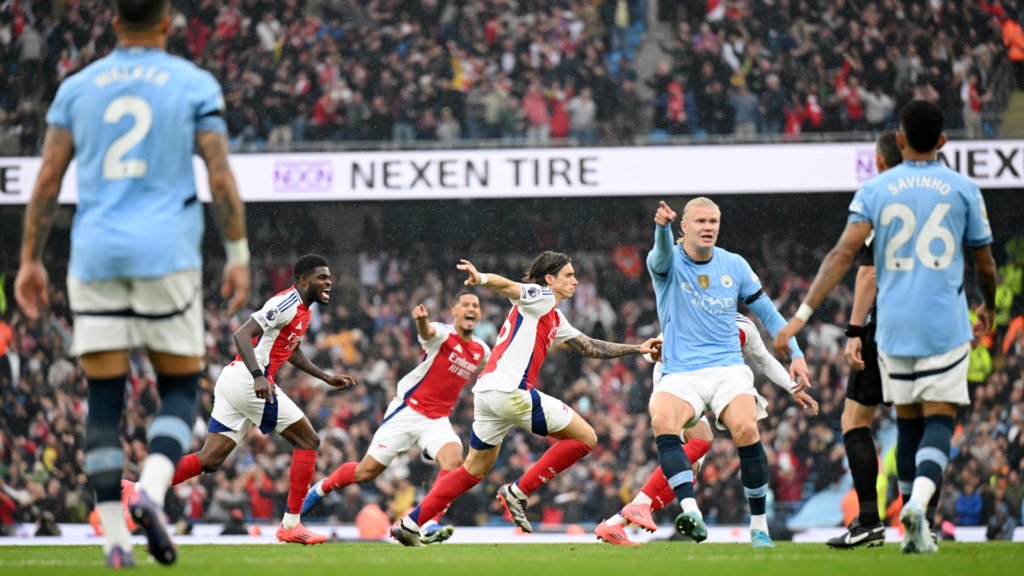
A big chance in football is defined by data provider Opta as a situation where a player is expected to score, typically a one-on-one with the goalkeeper or a shot from very close range with no defenders blocking the path to goal. Big chances represent the highest-quality goalscoring opportunities in football, with an expected conversion rate of approximately 35 to 45 percent — significantly higher than the average shot’s conversion rate of around 10 percent. Tracking big chances created and big chances missed provides valuable insight into team attacking quality and individual finishing efficiency.
How Big Chances Are Defined and Tracked
The precise definition of a big chance involves subjective assessment by match analysts, though the criteria are relatively consistent. A situation qualifies as a big chance when a player receives the ball in a position where a reasonable player would be expected to score more often than not, or close to it. This includes clear one-on-one situations with the goalkeeper where no defender is well-positioned to intervene, tap-ins from close range following a cross or cutback, open goals where the goalkeeper is out of position, and headers from close range in central positions where the ball is well-delivered.
The big chance metric is closely related to expected goals but offers a simpler, more categorical approach. While xG assigns a specific probability to every shot (0.03, 0.15, 0.42, etc.), big chances use a binary classification — either a chance qualifies as big or it does not. This simplicity makes big chances more accessible for casual analysis while sacrificing the precision of xG’s continuous probability scale. In practice, big chances correspond roughly to shots with an xG of 0.30 or above, though the exact threshold is not formally defined and varies between individual assessments.
The number of big chances created per match is a strong indicator of attacking quality. Top teams in the Premier League create approximately 2.5 to 3.5 big chances per match on average, while weaker attacking teams may create only 1.0 to 1.5. This variation directly influences goalscoring probability — a team that creates three big chances per match has far more opportunity to score than one that creates only one, even if the lower-creating team is more efficient at converting their limited opportunities. Consistency in big chance creation is one of the hallmarks of genuine attacking quality.
Big chances missed is the complementary statistic that measures how frequently players fail to convert these high-quality opportunities. A player or team that misses a high proportion of big chances is underperforming their chance quality and is likely to see improved goal output in future matches as their conversion rate regresses towards the mean. Conversely, a team that converts nearly all of their big chances is overperforming and may see a decline in their scoring rate even if their chance creation remains constant.
Big Chances in Team Evaluation
The ratio of big chances to total shots provides insight into a team’s attacking efficiency. A team that generates a high proportion of their shots as big chances is creating quality over quantity, penetrating the defence to create clear opportunities rather than settling for speculative efforts from distance. Teams like Manchester City under Pep Guardiola consistently rank among the best in big chance creation, reflecting their patient build-up play that probes for genuine openings rather than forcing shots from unfavourable positions.
Defensive big chance concession is equally informative. A team that concedes many big chances has fundamental defensive problems that are likely to result in goals regardless of their goalkeeper’s quality. Even the best goalkeepers save big chances only 55 to 65 percent of the time, meaning a team that concedes three big chances per match will be scored against in most games. Identifying teams with high big chance concession rates helps predict matches where goals against are likely, informing correct score predictions and BTTS analysis.
The big chance creation and concession rates are more stable over time than actual goal counts, making them better predictors of future performance. A team that creates many big chances will eventually score freely once their conversion rate normalizes, while a team that concedes many big chances will eventually concede more goals. This regression tendency is one of the most reliable principles in football analytics and provides the basis for identifying teams whose results are likely to improve or decline based on the quality of chances they are generating and allowing.
Big Chances and Correct Score Predictions
Big chance data directly informs correct score prediction models by refining the estimate of each team’s true attacking and defensive quality. A team that has been creating 3.0 big chances per match but scoring only 1.0 goal is likely to start scoring more as their conversion rate improves. A model that relies only on goals scored would underestimate this team’s attacking quality, while a model that incorporates big chance data would correctly identify them as a strong attacking unit with temporarily poor finishing. At Correct Score Predict, big chance metrics are part of our comprehensive analytical approach that captures the full picture of team quality to produce accurate scoreline forecasts.