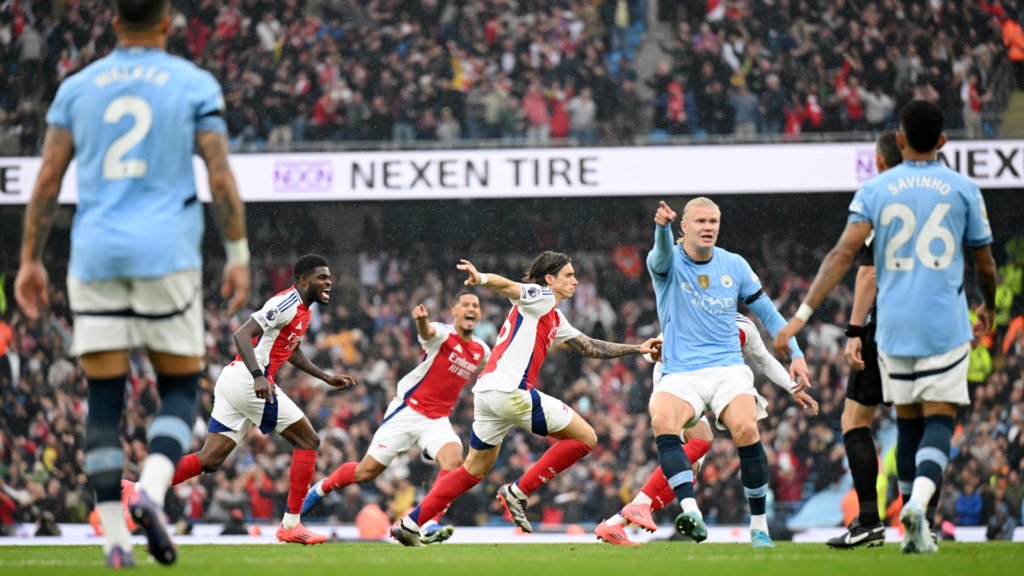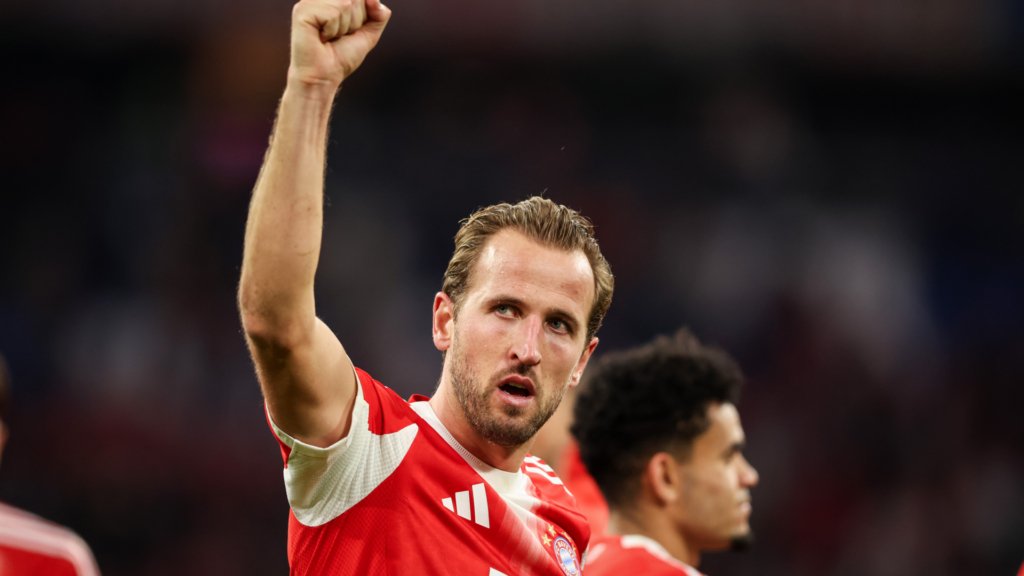
A brace in football refers to a player scoring two goals in a single match. The term comes from the Old French word “brace” meaning a pair of arms, which evolved in English to mean a pair of anything. In football, scoring a brace is considered an excellent individual performance, falling just short of the hat trick’s three goals but still representing a significant contribution to the team’s result. Braces occur far more frequently than hat tricks, making them a statistically important phenomenon for match analysis and correct score predictions.
How Common Are Braces in Football?
Braces occur significantly more often than hat tricks but still represent a standout individual performance. In a typical Premier League season, approximately 80 to 100 braces are scored across all 380 matches, meaning a brace occurs in roughly 20 to 25 percent of all games. This frequency makes braces a meaningful statistical event that prediction models should account for, as they indicate that one player has dominated their team’s goalscoring output in that match.
The probability of a specific player scoring a brace in any given match depends on several factors. Elite strikers like Erling Haaland, Harry Kane, and Mohamed Salah score braces in approximately 8 to 12 percent of their Premier League appearances, while average strikers may score braces in only 2 to 4 percent of their games. Midfielders and defenders who score occasionally have brace rates well below 1 percent, reflecting the concentration of multi-goal performances among dedicated attackers.
The match context in which braces occur reveals interesting patterns. Braces are disproportionately scored in matches where one team dominates, with the brace scorer’s team winning the match approximately 85 percent of the time. Home players are more likely to score braces than away players, reflecting the broader home advantage in football. Braces are also more common in matches with high total goals, naturally, as more goals in the match create more opportunities for a single player to score multiple times.
The timing of the two goals in a brace varies, but statistical analysis shows that a player who scores early in the match has a notably increased probability of scoring again later. This may reflect psychological confidence, tactical adjustments by the team to feed their in-form scorer, or simply the fact that the conditions that allowed the first goal — such as a weak opposing defence or favourable tactical matchup — persist throughout the match. A player who scores in the first 30 minutes has approximately a 15 to 20 percent chance of scoring again in the same match, compared to the baseline probability of around 25 percent for scoring any goal at all.
Brace Scorers: Which Players Score Two Goals Most Often?
The players who score the most braces are typically the same players who top the overall goalscoring charts, but with some interesting variations. Penalty takers have a structural advantage in brace statistics because they have access to an additional high-quality chance beyond what open play provides. A player who scores from open play and then converts a penalty has a relatively straightforward path to a brace, and many prolific brace scorers — including Cristiano Ronaldo, Lionel Messi, and Mohamed Salah — have been their teams’ primary penalty takers throughout their careers.
Players who are heavily involved in their team’s attack and take a high number of shots per match also tend to score more braces. The logic is straightforward: more shots create more opportunities to score, and more goals create more opportunities for multiple goals. Erling Haaland’s extraordinary brace rate at Manchester City reflects both his shooting volume and his exceptional finishing ability — he takes a high number of shots and converts them at a rate significantly above the league average, creating a combination that produces frequent multi-goal games.
Some players have scoring patterns that make braces particularly likely. Players who perform well in matches where their team creates many chances — often against weaker opposition — tend to cluster their goals, producing several braces and hat tricks alongside occasional goalless performances. This clustering effect is important for prediction models because it means that these players’ goals are not independently distributed across matches. Instead, their goal output follows a distribution where high-scoring games and low-scoring games are both more likely than average, with fewer one-goal performances than a random distribution would predict.
The age and experience of a player also influences brace frequency. Experienced strikers in the prime of their careers (typically ages 25 to 30) tend to score braces at the highest rate, as they combine peak physical ability with the tactical intelligence and composure needed to create and convert multiple chances in a single match. Younger players may have the physical attributes but lack the positioning awareness, while older players may have the intelligence but lack the pace and movement to repeatedly get into scoring positions.
Braces vs Hat Tricks: The Statistical Step Up
The gap between scoring a brace and completing a hat trick is statistically wider than it might appear. While a player needs to find one more goal to upgrade their brace to a hat trick, the probability of doing so is surprisingly low. Of all players who score two goals in a Premier League match, only approximately 15 to 20 percent go on to score a third. This means that four out of five players who score a brace do not complete the hat trick, making the brace the final tally far more often than it serves as a stepping stone to three goals.
Several factors explain this gap. Managers may substitute a player who has scored twice, especially if the team has a comfortable lead and wants to rest the player for upcoming matches. The opposing team may also adjust their defensive approach after conceding twice to the same player, assigning a specific marker or changing their defensive shape to limit that player’s opportunities. Additionally, as a match progresses and the score becomes more one-sided, the tempo often drops as the winning team manages the game, reducing the number of chances created and the likelihood of a third goal.
For bettors, the brace-to-hat-trick conversion rate is valuable information when considering anytime goalscorer and hat trick markets. If a player has scored twice in a live match, the implied probability of them completing a hat trick should be approximately 15 to 20 percent, which can be compared against the live odds being offered. If bookmakers are pricing a hat trick at odds equivalent to a lower probability, there may be value in the bet. Conversely, if the odds suggest a higher probability than the historical rate, the bet may be overpriced.
Braces and Correct Score Predictions
Braces have significant implications for correct score predictions because they concentrate goals with a single player, which affects the probability distribution of scorelines. In a match where one player scores a brace, the most common outcomes are 2-0, 2-1, 3-0, and 3-1 for the brace scorer’s team. The 2-0 scoreline is particularly associated with braces, as it represents the scenario where a single player is responsible for all of their team’s goals without the opposition scoring.
When building correct score models, the probability of a brace occurring should influence how you distribute goal probabilities across different players and scenarios. A model that treats each goal as independent may underestimate the frequency of scorelines like 2-0 and 3-0 where one player scores multiple times. By incorporating the brace probability — which increases when elite strikers face weak defences — the model can more accurately reflect the real-world distribution of scorelines.
For in-play correct score betting, a player scoring their first goal is a trigger event that should update your scoreline predictions. The conditional probability of the match ending 2-0 or 2-1 increases once a specific player has opened the scoring, because their probability of scoring again is elevated compared to the pre-match baseline. This Bayesian updating is a fundamental concept in in-play betting strategy, and understanding brace probabilities is a key component.
At Correct Score Predict, our prediction models incorporate individual player scoring patterns, including brace and hat trick rates, to generate more accurate scoreline forecasts. By understanding how individual brilliance can shape match outcomes, we provide predictions that capture both the team-level and individual-level dynamics that determine final scorelines.