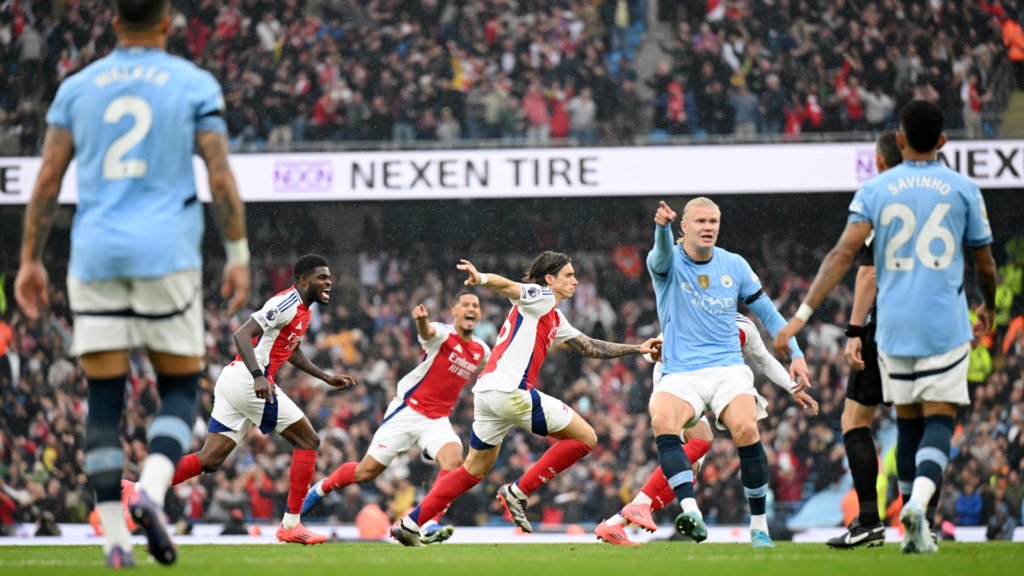
A corner kick is a method of restarting play in football, awarded to the attacking team when the ball crosses the goal line (but not between the goalposts) after last being touched by a defending player. The corner kick is taken from the corner arc on the side of the goal where the ball went out of play, and a goal can be scored directly from a corner kick without the ball needing to touch another player first. Corners are one of football’s most frequent set-piece situations, with an average Premier League match producing approximately ten to twelve corner kicks combined, making them a consistent and important source of goalscoring opportunities throughout a season.
Corner Kick Rules and Procedures
The ball must be placed inside or on the corner arc for a valid corner kick. The corner arc is a quarter-circle with a radius of one metre drawn at each corner of the pitch, and a small flag post at least 1.5 metres high marks each corner. Defending players must remain at least 9.15 metres (ten yards) from the corner arc until the ball is in play, which occurs when the ball is kicked and clearly moves. The kicker cannot touch the ball a second time until it has touched another player, meaning they cannot dribble the ball from the corner themselves.
There is no offside offence directly from a corner kick, which is a crucial rule that distinguishes corners from other restarts. This means that attacking players can position themselves anywhere on the pitch, including behind the last defender, when the corner is being taken. This rule allows teams to flood the penalty area with players making runs from deep positions, creating the chaotic, physical contests in the box that characterise corner kick situations. Once the ball has been played and is touched by another player, normal offside rules apply to any subsequent play.
The goalkeeper’s positioning during a corner kick is a tactical decision that reflects the team’s defensive philosophy. Some goalkeepers prefer to stay on or near their goal line, prioritizing their ability to react to shots and close-range headers. Others come to the edge of their six-yard box or even further, looking to punch or catch the ball before it reaches the attacking players. Assertive goalkeeping at corners can be extremely effective, as a goalkeeper who claims crosses confidently eliminates the danger immediately, but it also carries risk — a misjudged attempt to claim the ball can leave the goal exposed.
Short corners, where the kicker plays a pass to a nearby teammate rather than crossing the ball into the box, have become increasingly common in modern football. This approach is particularly favoured by teams that prefer to maintain possession and build attacks methodically rather than relying on the aerial duels that traditional corner kicks involve. Short corners can create different angles for crosses, draw defenders out of their set positions, and create numerical advantages in wide areas. However, they also give up the surprise and direct threat of an immediate delivery into the penalty area.
How Often Do Corner Kicks Lead to Goals?
The conversion rate of corner kicks — the percentage that directly or indirectly lead to a goal — is a frequently debated topic in football analytics. Research consistently shows that the direct conversion rate from corners is relatively low, typically between 2 and 4 percent across major European leagues. This means that, on average, a team needs to take approximately 25 to 50 corners to score one goal directly from these situations. When indirect chances are included (where the corner leads to a shot that is saved but the follow-up is scored, for example), the effective conversion rate rises to approximately 5 to 7 percent.
Despite this seemingly low conversion rate, corners remain valuable attacking opportunities because of their frequency. A team that averages six corners per match over a 38-game league season takes approximately 228 corners, which at a 3 percent direct conversion rate yields roughly seven goals from corners alone. These goals can be the difference between finishing positions, qualification for European competitions, or avoiding relegation. Some teams consistently outperform the average corner conversion rate through superior delivery, movement, and targeting, while others struggle to create meaningful chances from their corners.
The type of delivery significantly affects the likelihood of scoring. In-swinging corners — those that curve towards the goal — tend to produce more goals than out-swinging corners, which curve away from the goal. This is because in-swinging deliveries are more difficult for goalkeepers to deal with, as the ball moves towards them and the goal simultaneously, creating a split-second decision about whether to come for the ball or stay on the line. Near-post deliveries with flick-on headers to the far post are another effective technique, as they are difficult to defend against and can create second-ball opportunities in the six-yard box.
Defensive zonal marking versus man-marking at corners is one of football’s enduring tactical debates. Zonal marking assigns each defender a specific area of the penalty box to protect, while man-marking assigns each defender a specific opponent to track. Most modern teams use a hybrid system, combining zonal defenders in key areas with one or two man-markers on the opposition’s most dangerous aerial threats. Statistical analysis has not produced a definitive answer about which system is more effective, as the quality of execution matters more than the system itself.
Corner Kick Statistics and What They Tell Us
Corner kick statistics provide useful information for match analysis and prediction. The number of corners a team wins per match is often used as a proxy for attacking pressure and territorial dominance. Teams that win significantly more corners than their opponents tend to be the ones spending more time in the attacking third, creating chances, and forcing defenders to concede corners through blocked shots and defensive clearances. However, this correlation is not perfect — some teams win lots of corners through a crossing-heavy approach that is not necessarily effective at creating genuine scoring opportunities.
The corner count market is a popular betting option, with bookmakers offering over/under lines, handicaps, and exact total corners markets. The average total corners in a Premier League match is approximately 10.5, though this varies significantly based on the teams involved and the match context. Matches between a dominant possession team and a deep-defending opponent often produce high corner counts, as the attacking team wins repeated corners while trying to break down the defensive block. Derby matches and end-of-season fixtures with high stakes also tend to produce more corners as both teams push forward aggressively.
Some teams show consistent patterns in their corner statistics that persist across multiple seasons. Manchester City, for example, has consistently been among the highest corner-winning teams in the Premier League under Pep Guardiola, reflecting their possession-dominant style and constant attacking pressure. At the other end, teams that sit deep and defend on the counter tend to concede more corners but also win fewer themselves. These persistent patterns make corner markets relatively predictable for informed bettors who track team-level statistics.
Corner Kicks and Correct Score Predictions
While corner kicks do not directly determine scorelines, they represent a meaningful source of goals that should be factored into any comprehensive prediction model. A team facing an opponent with a poor record of defending corners has an additional route to goal that increases the probability of them scoring, shifting the expected scoreline distribution in their favour. Conversely, a team that rarely scores from corners but faces a strong defensive set-piece team may need to rely more heavily on open-play creativity, which affects the types of scorelines that are most likely.
The relationship between corners and goals is particularly important in matches between teams of similar quality, where small margins determine the outcome. In these encounters, the team with better set-piece delivery and aerial prowess may have a decisive advantage that does not show up in open-play statistics. This is why some teams invest heavily in set-piece coaching and why specialist set-piece coaches have become increasingly common in professional football — the marginal gains from corners and other set pieces can translate directly into points and results.
For in-play betting, monitoring the corner count during a match provides context about the balance of play and the likelihood of future goals. If a team has had eight corners but has not scored, the probability of them eventually converting one of these chances may remain high, especially if their deliveries have been creating dangerous situations. Alternatively, a high corner count without goals may indicate that the team’s approach is predictable and the opponent’s defence is coping well, suggesting that the scoreline may remain low.
At Correct Score Predict, we incorporate set-piece data, including corner kick frequency and conversion rates, into our prediction models. Understanding how corners contribute to the overall goal landscape of a match helps create more nuanced and accurate scoreline forecasts that go beyond simple open-play expected goals analysis.