Injury time is a commonly used alternative term for stoppage time or added time in football — the additional minutes played at the end of each half to compensate for time lost during play stoppages. While the official Laws of the Game use the term “allowance for time lost,” the phrase “injury time” has persisted in popular usage because injuries were historically the most visible and significant reason for play being stopped. Today, injury time encompasses all types of delays including substitutions, VAR reviews, goal celebrations, time-wasting, and disciplinary actions, making it a much broader concept than its name suggests.
Why the Term Injury Time Persists
The term injury time became embedded in football vocabulary during the sport’s early decades when injuries were the primary reason for match stoppages that required additional playing time. In the era before tactical substitutions, medical staff entering the field to treat an injured player was one of the few situations where play would be halted for an extended period. The referee would note the duration of these medical stoppages and add equivalent time at the end of the half, ensuring that both teams received a fair amount of actual playing time.
The distinction between injury time and stoppage time is purely linguistic — they refer to exactly the same thing. Official FIFA and IFAB documentation uses phrases like “allowance for time lost” or “additional time,” while broadcasters and commentators in different countries use varying terminology. In the United Kingdom, both “injury time” and “stoppage time” are commonly used interchangeably, while “added time” is the most common term on international broadcasts. In Spanish football, the equivalent phrase is “tiempo de descuento” (discount time), reflecting a different conceptual framework where the added minutes represent time being returned to the match rather than extra time being given.
The persistence of the term injury time sometimes causes confusion among newer fans, who may believe that injury time is only added when a player is actually injured during the match. This misconception can affect expectations about how much time will be added — a match with no injuries but multiple VAR reviews and substitutions may see five or six minutes of added time, surprising fans who expected little or no injury time because no one was physically hurt. Understanding that injury time encompasses all stoppages, not just injuries, is important for accurately anticipating how long a match will last.
In the modern game, actual injuries account for only a small proportion of the total time lost during a match. VAR reviews, goal celebrations, substitutions (especially with the increase to five substitutions per team), drink breaks, and deliberate time-wasting collectively consume far more time than genuine injuries. The 2022 FIFA World Cup highlighted this reality when referee instructions to calculate stoppage time accurately produced added-time periods of eight, ten, or even fourteen minutes per half — durations that would have been unthinkable in earlier eras but reflected the true extent of time lost during normal play.
How Injury Time Is Calculated
The referee is solely responsible for keeping track of time lost during each half and determining the amount of injury time to be added. There is no fixed formula or automatic calculation — the referee exercises judgment based on their running tally of significant stoppages. The fourth official communicates the minimum number of additional minutes by displaying a digital board on the touchline, but the referee has the authority to extend play beyond this minimum if further time is lost during the added period itself.
The factors that contribute to injury time calculation include all substitutions (approximately 30 seconds each is typically allowed), assessment and treatment of injured players (which can range from 30 seconds to several minutes depending on the severity), time-wasting by either team (deliberate delays in taking goal kicks, free kicks, throw-ins, and corners), VAR reviews (which can add two to four minutes per review), goal celebrations (approximately 45 to 60 seconds per goal), and any other significant delay such as pitch invasions, floodlight failures, or objects thrown onto the pitch by spectators.
The accuracy of injury time calculation has been a subject of ongoing debate and research. Studies conducted before the 2022 World Cup found that referees typically underestimated the actual time lost, adding only about 60 to 70 percent of the true stoppage duration. For example, if the actual time lost in a half was eight minutes, the referee might add only five or six minutes of injury time. This systematic underestimation was one of the factors that prompted FIFA to instruct referees to be more accurate in their calculations, leading to the significantly longer added-time periods now seen in most major competitions.
Different leagues and competitions have historically had different norms around injury time length. Serie A in Italy has traditionally featured longer injury time periods than the Bundesliga in Germany, partly reflecting cultural differences in time-wasting behaviour and referee tolerance. The Premier League has seen injury time increase significantly since the adoption of more accurate timekeeping standards, with the average total added time (both halves combined) rising from approximately five minutes to eight or nine minutes per match between the 2020-21 and 2023-24 seasons.
The Impact of Injury Time on Match Results
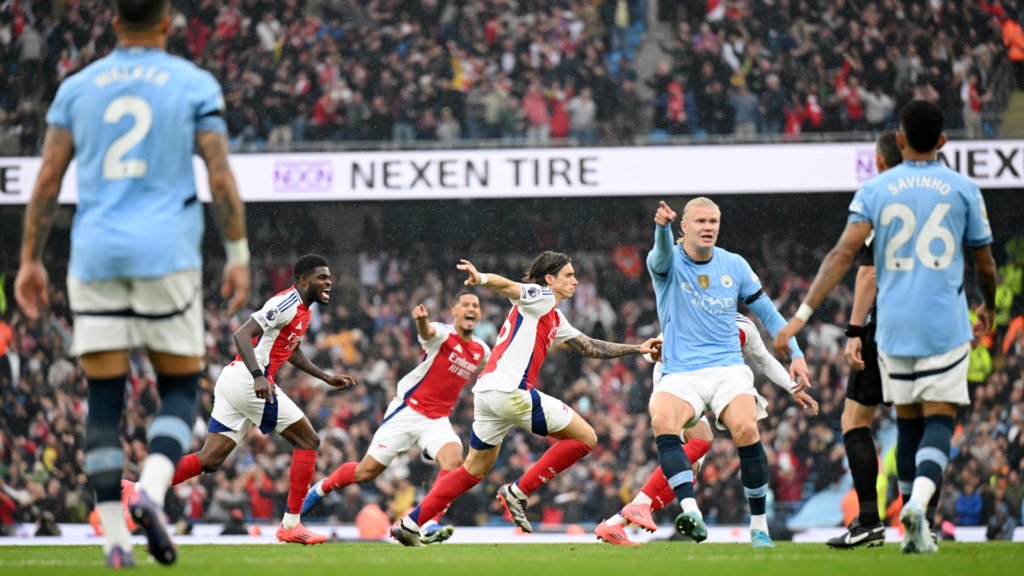
Injury time is disproportionately important for match outcomes relative to its duration. Although it typically represents only 5 to 10 percent of the total playing time, approximately 10 to 12 percent of all goals in a season are scored during injury time periods. This overrepresentation reflects the heightened intensity, tactical desperation, and defensive fatigue that characterize the closing stages of each half. Teams that are trailing push forward with maximum commitment, while leading teams’ concentration may waver under the physical and mental strain of managing a match through its final minutes.
The distribution of injury time goals reveals interesting patterns about match dynamics. First-half injury time (minutes 45+1 to 45+3 or beyond) tends to produce goals from teams that are dominating the match and maintaining pressure as the half draws to a close. These goals often extend an existing lead rather than changing the match situation fundamentally. Second-half injury time goals are more varied and impactful — they include last-minute equalizers that salvage draws, late winners that steal all three points, and consolation goals that change the correct scoreline without affecting the match result.
The psychological weight of injury time goals goes beyond their statistical frequency. Conceding a late equalizer or winning goal has been shown to have a significant impact on teams’ subsequent performances. Research indicates that teams that concede in injury time to lose points are more likely to drop points in their next match as well, suggesting a lingering psychological effect. Similarly, teams that score dramatic late goals often carry momentum and confidence into subsequent fixtures, creating a virtuous cycle of positive results.
Injury Time and Correct Score Betting
For correct score bettors, injury time represents the final window of uncertainty before the match result is confirmed. The predicted scoreline is never secure until the referee’s final whistle, and the amount of injury time directly affects the probability of last-minute changes to the score. A match heading into eight minutes of second-half injury time has significantly more time for the scoreline to change than one with only two minutes added, and this difference should be factored into in-play betting decisions.
The scoring rate during injury time is approximately 0.025 to 0.03 goals per minute, which is comparable to or slightly below the rate during regular play. However, this average rate masks significant variation depending on the match situation. In matches where one team is trailing by a single goal, the scoring rate in injury time increases substantially as the losing team commits maximum resources forward. Conversely, in matches where one team has a comfortable lead, injury time tends to be uneventful as the winning team manages the clock and the losing team accepts the result.
Understanding referee tendencies in adding injury time can provide an edge in certain betting markets. Some referees consistently add more time than others, and this tendency persists across multiple seasons. A referee who averages seven minutes of total added time per match creates more opportunities for late goals than one who averages only four minutes. This information, combined with knowledge of the match situation and team behaviours, helps inform predictions about whether the current scoreline is likely to be the final result.
At Correct Score Predict, our models incorporate injury time scoring probabilities and referee data to provide the most accurate possible predictions. Understanding that the match does not end at the 90th minute — and that significant scoring events can occur in the additional period — is essential for generating realistic scoreline forecasts that reflect the full dynamics of modern football matches.