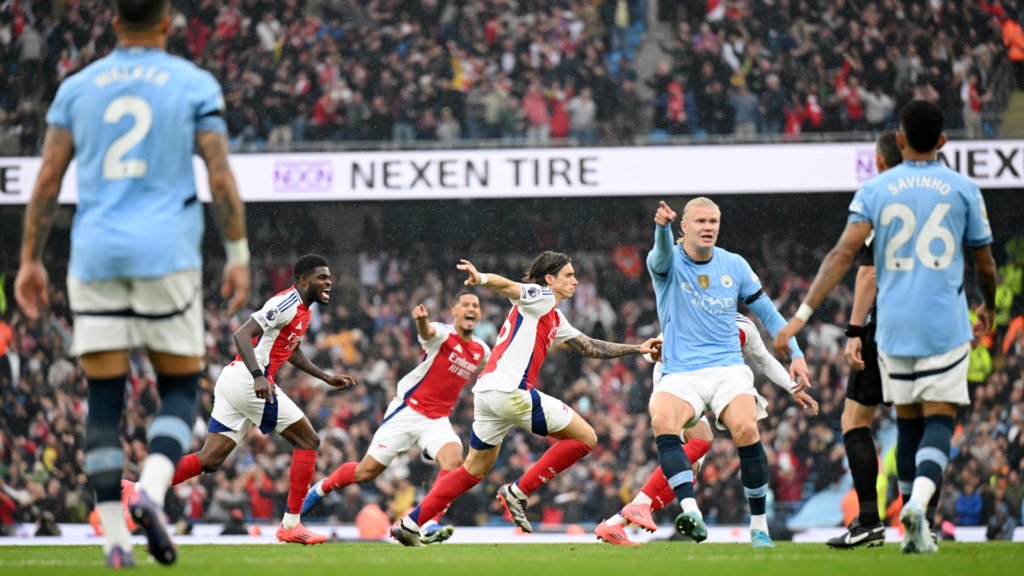
A penalty kick in football is a direct free kick taken from the penalty spot, located twelve yards (approximately eleven metres) from the centre of the goal line. It is awarded when a defending player commits a foul or handball offence inside their own penalty area that would normally result in a direct free kick. The penalty kick is one of football’s most dramatic moments, pitting the kicker against the goalkeeper in a one-on-one confrontation with the entire match potentially hanging in the balance. Understanding the rules, psychology, and statistical patterns around penalties is invaluable for both football enthusiasts and bettors.
When Is a Penalty Kick Awarded?
A penalty kick is awarded when a player commits a direct free kick offence inside their own penalty area while the ball is in play. Direct free kick offences include tripping, pushing, holding, or charging an opponent carelessly, recklessly, or with excessive force. Deliberate handball — where a player handles the ball to gain an unfair advantage, deny a goal, or deny a goalscoring opportunity — is another common reason for a penalty being awarded, and this area of the rules has undergone significant revision in recent years.
The introduction of the Video Assistant Referee (VAR) has had a profound impact on penalty decisions. Before VAR, referees relied solely on their real-time judgment, and many penalty-worthy incidents were missed, particularly those involving subtle shirt-pulling, standing on feet, or body-checking inside the box during set pieces. Since VAR’s widespread adoption, the number of penalties awarded per season has increased noticeably across most major leagues. In the Premier League, the average number of penalties per season rose from around 100 to approximately 120 in the first few seasons after VAR’s introduction, though this number has since stabilized as players adjusted their behaviour.
Not all fouls inside the penalty area result in a penalty kick. If the ball is not in play — for example, during a goal kick or before a corner has been taken — a foul inside the box may be punished by a different sanction. Additionally, indirect free kick offences such as obstruction without contact, dangerous play, or a goalkeeper holding the ball for more than six seconds are punished with an indirect free kick from where the offence occurred, even if it happened inside the penalty area. Understanding these distinctions helps fans and bettors recognize when a penalty claim is legitimate versus when a different decision is correct.
Penalty shootouts, used to determine the winner of knockout matches that end in a draw after extra time, follow similar but slightly different rules. Each team takes five penalties alternately, and if the scores remain level, the shootout continues into sudden death. During a shootout, the goalkeeper must remain on the goal line until the ball is kicked, and all other players must stay in the centre circle. The psychological pressure of a shootout is immense, and historical conversion rates in shootouts tend to be lower than for in-game penalties.
Penalty Kick Statistics and Conversion Rates
Across major European leagues, the overall conversion rate for penalty kicks sits at approximately 75 to 78 percent. This means that roughly one in four penalties is either saved by the goalkeeper, struck against the woodwork, or missed entirely. While this might seem like a high success rate, the context of when penalties occur — often in high-pressure moments late in matches or in crucial fixtures — adds significant psychological complexity that pure statistics cannot fully capture.
Research into penalty-taking techniques has revealed several interesting patterns. Kickers who choose to place the ball in the top corners of the goal have a conversion rate exceeding 90 percent when they hit the target, as goalkeepers simply cannot reach these areas quickly enough. However, the risk of missing the target entirely is higher with these placements. Penalties placed low and to the sides have slightly lower success rates but are easier to execute consistently. The decision between power and placement is one of the key tactical choices for any penalty taker.
Goalkeeper behaviour during penalties has been extensively studied. Research by economist Ofer Azar found that goalkeepers dive left or right approximately 94 percent of the time, even though staying in the centre of the goal would save more penalties statistically. This is because the psychological cost of not moving — appearing passive while the ball goes into the corner — is greater than the cost of diving the wrong way. Goalkeepers are influenced by what researchers call action bias, preferring to be seen doing something even when inaction would be more effective.
The order in which penalties are taken in a shootout also matters. The team that shoots first wins approximately 60 percent of penalty shootouts, a significant advantage attributed to the psychological pressure of always needing to respond. To address this imbalance, FIFA has experimented with an ABBA format (where the second team shoots first in alternate rounds) rather than the traditional alternating pattern, though this has not yet been widely adopted in major competitions.
Famous Penalties and Their Impact on Football History
Penalty kicks have produced some of football’s most iconic and heartbreaking moments. Roberto Baggio’s miss in the 1994 World Cup final, where he blazed the ball over the crossbar to hand Brazil the trophy, remains one of the most replayed moments in football history. The image of Baggio standing motionless at the penalty spot, head bowed, encapsulates the devastating impact a missed penalty can have on a player’s career and legacy, even though Baggio was one of the tournament’s outstanding performers.
England’s history with penalty shootouts was notoriously troubled for decades, with losses in shootouts at the 1990 World Cup, Euro 1996, the 1998 World Cup, Euro 2004, the 2006 World Cup, and Euro 2012. This pattern was only broken when Gareth Southgate, himself a victim of a famous penalty miss in Euro 96, managed England to a shootout victory over Colombia in the 2018 World Cup. The team’s subsequent success in shootouts — including victories at Euro 2020 against Switzerland — demonstrated that penalty performance can be improved through dedicated preparation and psychological coaching.
In domestic football, last-minute penalties regularly determine match outcomes and season-long narratives. Sergio Aguero’s penalty against QPR in the final minutes of the 2011-12 Premier League season, though technically not the title-winning goal itself, was part of the most dramatic final-day conclusion in English football history. In correct score terms, that match moved from 2-2 to 3-2 in added time, a result that virtually no predictor would have foreseen.
Penalties in Correct Score Predictions
Penalties are a significant factor in correct score betting because they represent goals that arise from specific match events rather than open play patterns. A team that wins many penalties effectively has an additional route to goal beyond their normal attacking play, which increases the probability of higher-scoring outcomes. Certain players and teams are statistically more likely to win penalties due to their playing style — teams with fast, skilful forwards who frequently dribble into the box tend to win more penalties than teams that rely on long-range shooting or crossing.
When building correct score predictions, the probability of a penalty being awarded in any given match is approximately 20 to 25 percent across major European leagues. This baseline probability increases in matches featuring teams known for their box activity and decreases in matches between defensive, counter-attacking sides. The referee appointment also matters, as some officials have historically awarded significantly more penalties than others, a trend that persists even in the VAR era.
For in-play correct score betting, a penalty being awarded is a pivotal moment. The expected goals value of a penalty is approximately 0.76 xG, reflecting the high but not certain conversion rate. If a penalty is awarded when the score is 0-0, the most likely scoreline shifts dramatically from a draw to a 1-0 result for the team taking the kick. Bettors who can quickly assess these probability shifts and act before the odds fully adjust can find value in the moments between a penalty being awarded and taken.
At Correct Score Predict, our models incorporate penalty probability data, including team-level rates of winning and conceding penalties, individual conversion rates, and referee tendencies. This data helps generate more accurate scoreline predictions that account for the full range of ways goals can be scored in a football match.