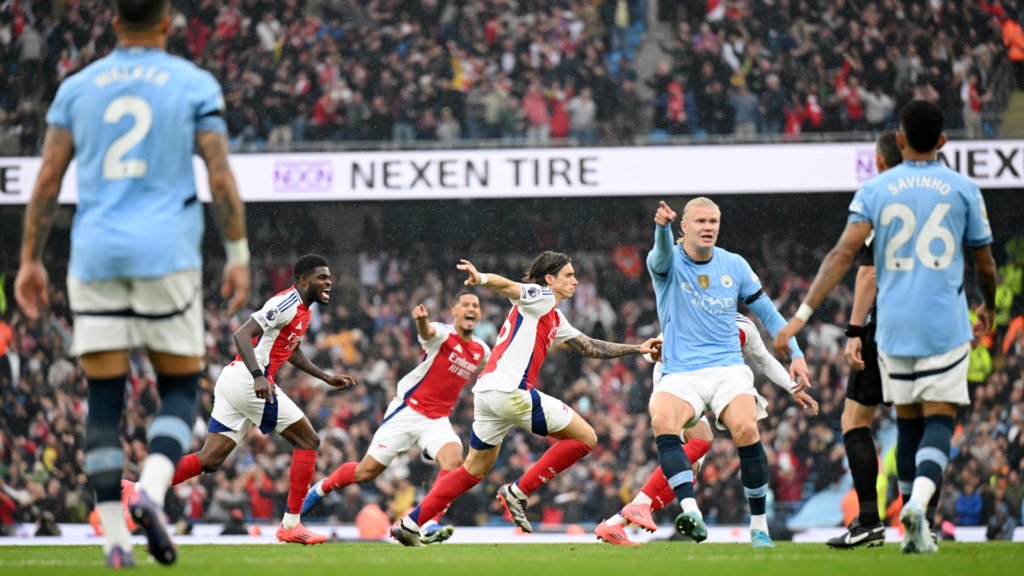
Win rate in football is the percentage of matches a team wins over a given period, calculated by dividing total wins by total matches played. A team that wins 22 of 38 league matches has a win rate of 57.9 percent. Win rate is the most direct measure of competitive success and is closely tied to league position, as the teams with the highest win rates invariably finish near the top of the table. Understanding win rate patterns, how they vary by context, and how they relate to other performance metrics helps inform match predictions and betting decisions.
Win Rate Patterns in Football
In the Premier League, the championship-winning team typically has a win rate between 68 and 82 percent, translating to 26 to 31 wins from 38 matches. Manchester City’s record-breaking 2017-18 season saw them win 32 of 38 matches (84.2 percent), the highest single-season win rate in Premier League history. At the other extreme, relegated teams typically have win rates between 13 and 26 percent (5 to 10 wins from 38). Teams finishing in the European qualification places (fourth to seventh) typically win between 50 and 63 percent of their matches.
Home and away win rates differ substantially. The average home win rate across the Premier League is approximately 44 to 48 percent, while the average away win rate is approximately 28 to 32 percent. The remaining matches end in draws. Top teams may maintain home win rates above 80 percent and away win rates above 55 percent, while bottom teams may win only 20 to 30 percent of home matches and 10 to 15 percent of away fixtures. These home/away differentials are important for match prediction, as they directly affect the probability of each team winning a specific fixture based on where it is being played.
Win rate against different quality tiers of opposition reveals more about a team’s actual level than their overall win rate. A team that wins 90 percent of matches against bottom-half teams but only 30 percent against top-half teams has a very different profile than one that wins 60 percent against both groups. The first team is efficient at beating weaker opponents but struggles against quality — useful for accumulating points but vulnerable in big matches. The second team is more consistent across all opponents and may be better equipped for knockout competitions where every opponent is strong.
Seasonal win rate trends can identify teams in ascent or decline. A team whose win rate improves from 40 percent in the first third of the season to 60 percent in the final third is on an upward trajectory that may continue into the following season. Conversely, a team whose win rate declines through the season may be suffering from squad fatigue, injury accumulation, or tactical stagnation that opponents have learned to exploit. These trends help predict whether a team’s current performance level is sustainable or whether regression in either direction is likely.
Win Rate vs Expected Points
A team’s actual win rate may differ from their expected win rate based on underlying performance metrics. Expected points models — which use xG data to simulate thousands of match outcomes and calculate the most likely points return — can identify teams that are overperforming or underperforming their true quality level. A team with a 65 percent win rate but expected win rate of only 50 percent based on xG is benefiting from luck, clinical finishing, or excellent goalkeeping and may see their results decline. A team with a 40 percent win rate but 55 percent expected rate is underperforming and likely to improve.
This distinction between actual and expected win rate is one of the most powerful predictive tools in football analytics. By identifying the gap between results and underlying performance, bettors can anticipate which teams are likely to improve and which are likely to decline, positioning themselves ahead of market movements. The bookmaker’s odds are influenced by both actual results (which fans and media focus on) and expected performance (which sophisticated models capture), creating potential value when one diverges significantly from the other.
Win Rate and Correct Score Predictions
Win rate is implicitly captured in correct score prediction models through the expected goals framework. A team with a high win rate typically has high expected goals and low expected goals conceded, which naturally produces scoreline probability distributions weighted towards winning outcomes. The specific scorelines that contribute to the win rate — whether a team typically wins 1-0 or 3-1, for example — provide additional information about the expected scoreline distribution in any given match.
At Correct Score Predict, we use win rate data alongside expected goals, form, and other metrics to produce comprehensive predictions. Understanding a team’s win rate in different contexts — home, away, against strong teams, against weak teams — helps calibrate our models for specific matchups and produce the most accurate scoreline forecasts possible. Whether you are betting on match results, correct scores, or other markets, understanding win rate patterns enhances your ability to assess each team’s probability of success.