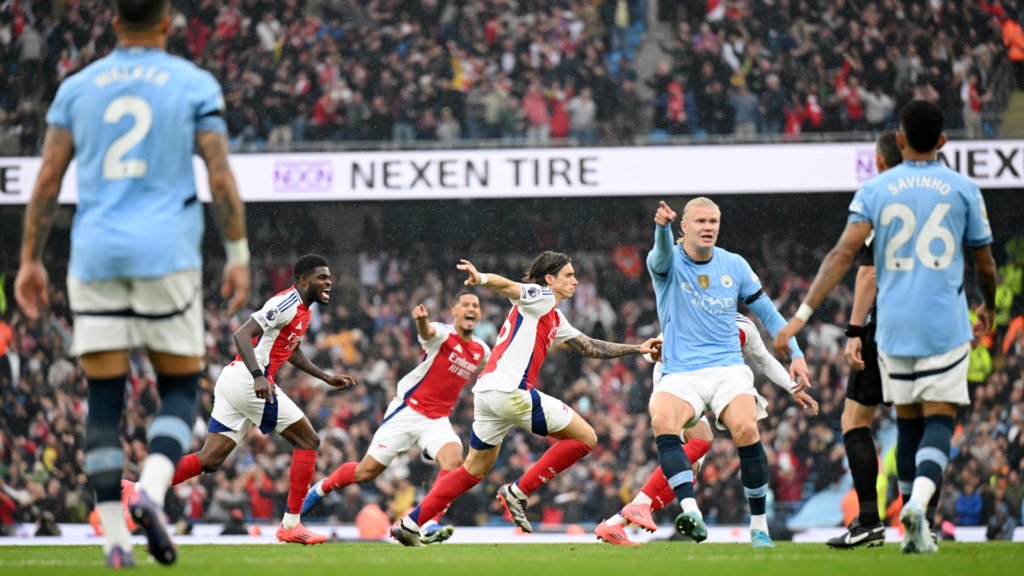
Goals conceded per game is a defensive metric that measures the average number of goals a team allows per match over a specified period. It is calculated by dividing total goals conceded by total matches played. While straightforward, this metric provides essential information about a team’s defensive quality and is one of the primary inputs for match prediction models. A team that concedes an average of 0.8 goals per match is significantly harder to score against than one conceding 1.8, and this difference directly affects the expected scoreline range and correct score probabilities for any match these teams play.
Goals Conceded Per Game Across Leagues
In the Premier League, the best defensive teams typically concede between 0.6 and 0.9 goals per match over a full season, while the weakest defences may concede 1.8 to 2.2. Chelsea’s remarkable 2004-05 season saw them concede only 15 goals in 38 matches, averaging 0.39 per game — a record that stands as one of the most impressive defensive performances in Premier League history. The league-wide average goals conceded per team per match is approximately 1.35 to 1.45 (which is simply the total goals per match average divided by two), providing a baseline against which individual teams can be evaluated.
The relationship between goals conceded per game and league position is one of the strongest statistical relationships in football. Teams that concede fewer goals finish higher in the table, and this correlation is at least as strong as the correlation between goals scored and league position. In many seasons, the team with the best defensive record wins the league or finishes very close to the top, reinforcing the football cliche that championships are won by defences. This statistical reality means that accurately estimating each team’s goals conceded rate is crucial for match prediction.
Home and away splits in goals conceded per game are consistent and significant. Teams typically concede 35 to 50 percent more goals per match away from home than at home, reflecting the well-documented away disadvantage. A team that concedes 0.8 per match at home might concede 1.2 away. These splits should be factored into match-specific predictions, as using the overall average without home/away adjustment will underestimate the away team’s defensive vulnerability and overestimate the home team’s.
Goals conceded per game can be decomposed into different sources to provide more detailed insight. Goals from open play, set pieces (including corners, free kicks, and throw-ins), and penalties each contribute differently to the total, and teams may have varying levels of vulnerability in each area. A team that concedes frequently from set pieces but rarely from open play has a specific defensive weakness that opponents with strong set-piece routines can exploit, while a team vulnerable to counter-attacks concedes a disproportionate share of goals from transition situations.
Expected Goals Against vs Actual Goals Conceded
The difference between a team’s expected goals against (xGA) and their actual goals conceded reveals whether they have been lucky or unlucky defensively. A team conceding 1.5 goals per match from 1.0 xGA per match is experiencing bad luck or poor goalkeeping — the quality of chances they are allowing suggests they should be conceding less. A team conceding 0.8 from 1.3 xGA is benefiting from exceptional goalkeeping or opponent finishing inefficiency. Over time, actual goals conceded tend to converge towards xGA, making the latter a better predictor of future defensive performance.
For correct score prediction, using xGA-adjusted defensive estimates rather than raw goals conceded produces more accurate forecasts because it accounts for the randomness in finishing quality and goalkeeping performance. A team that has been conceding more goals than their xGA suggests will likely improve defensively without any change in their actual defensive performance, simply through regression to the mean. At Correct Score Predict, we use xGA alongside actual goals conceded to produce the most accurate estimates of each team’s defensive quality.
Goals Conceded and Correct Score Predictions
Goals conceded per game directly informs the away team’s expected goals in correct score models. When combined with the home team’s goals scored per game and adjusted for the specific matchup, the away team’s goals conceded rate helps determine the home team’s expected goals, which is one of the two key parameters in Poisson-based scoreline prediction models. A match between a team that scores 2.0 per game and a team that concedes 1.5 per game will produce different expected goals than one between a 2.0 scorer and a 0.7 conceder, and these differences are directly reflected in the predicted scoreline probabilities.
At Correct Score Predict, we calculate match-specific expected goals for each team by integrating attacking quality (goals per game, xG) and defensive quality (goals conceded per game, xGA) data for both teams. This balanced approach ensures that our predictions reflect both sides of the ball and produce scoreline forecasts grounded in the full picture of each team’s capabilities.